

ANNOUNCEMENTS:
• There are a few available spaces for our January 28 workshop. This one is intriguing and full of surprises. The word “balance” itself is not at all sexy and certainly doesn’t attract attention like “color” does, but you’d be surprised at how working with it as a tool can add energy and intrigue to your paintings.
NOW TO ART THOUGHTS…
I’ve shown this before, but folks who’ve come on board since then might have missed it. Enjoy!
2700 years ago a Greek philosopher named Pythagoras standardized musical tuning into a system he called the Circle of Fifths. It was he who diagrammed the relationship of our twelve major keys, an invaluable tool for composers and musicians in Western music.
Within Pythagoras’ Circle of Fifths, we can locate any key and find its related chords. Here’s how it looks:
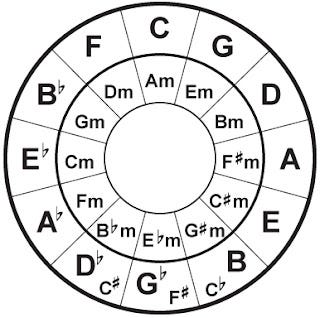
To see how this works, locate C on the circle. Glance to the left of C and you’ll see F, look to the right to find G. The chords C, F and G are the three major chords in the key of C. In the little circle underneath them are the minor chords related to the key of C.
Now here’s the fun part: four hundred years ago the traditional Color Wheel was diagrammed by Sir Isaac Newton. After some fine-tuning over time, this wheel also is also a twelve-part unit
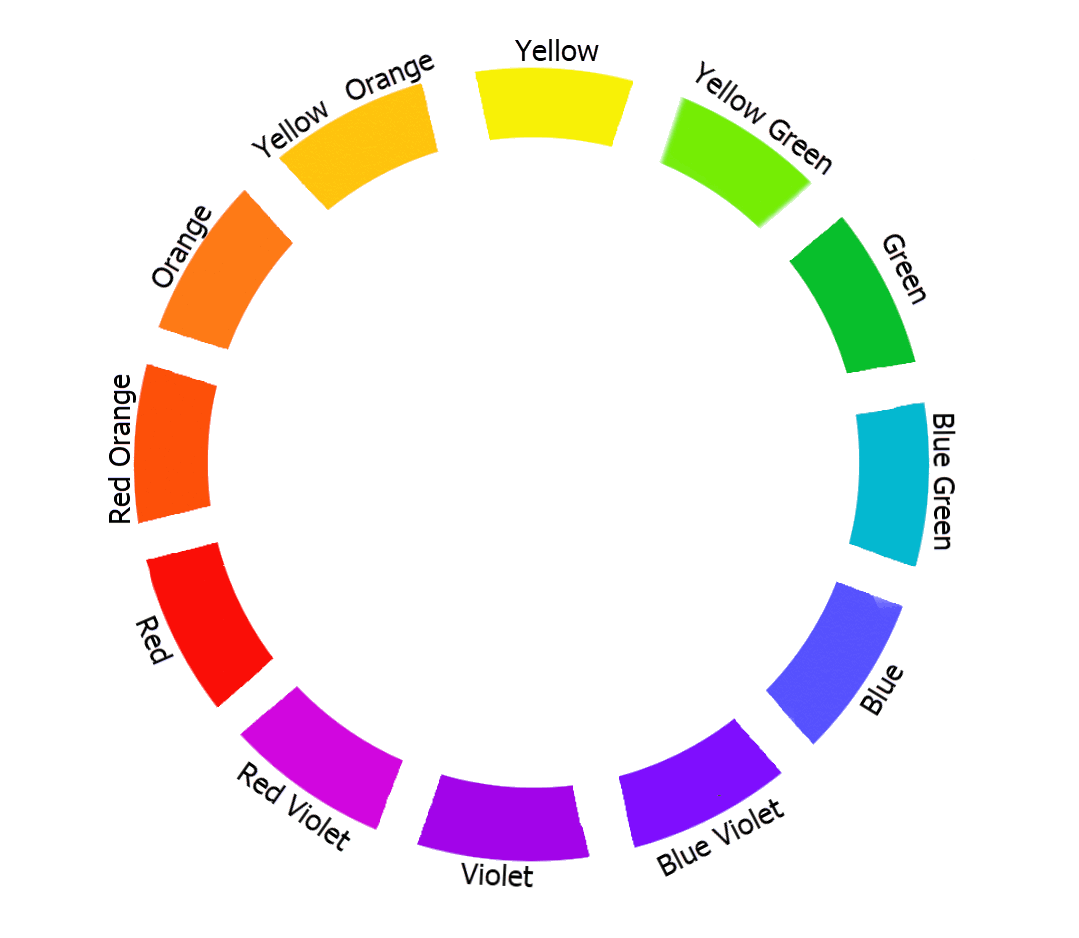
.When painters learn to use the 12-hue wheel according to the relationship each hue has with other hues, it becomes just as important to composing paintings as the circle of fifths is to composers of music.
Isn’t that an amazing comparison!