

The Elements, The Actions, The Results
and the Eyes That See That Happening
Over the years, as I have delved deeper into the issue of creating a “good” composition, I have realized that trying to follow the “rules” of composition can stifle an artist because the rules themselves fail to account for how the eye sees. After all, it is how the eye sees that makes the principles of composition work.
The biggest question, then, for me to answer was this: when a person is looking at a painting, what is happening in that painting that makes the eyes see it as they do?
Looking at the array of composing principles, I discovered that some of these principles are the results of some of the others, and that all actions use the elements that make things appear the way they do. It is what the artist does with those elements that causes our eyes to respond to a painting, either negatively, positively, casually, or indifferently.
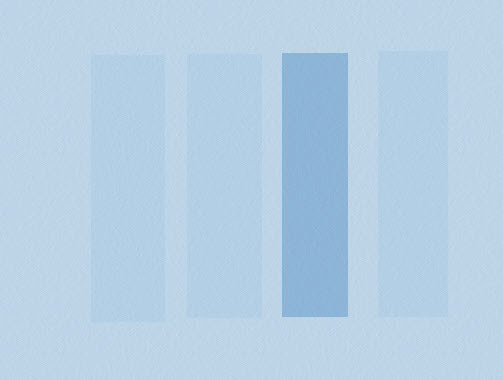
When you first looked at the graphic above, were you aware that your eyes went first to the darkest bar? Do you know why? It happened because the visual element value contrasts more strongly in that bar than in the other three. The more contrasting a value is with values around it, the quicker our eyes go to it.
Notice how the same composing action, contrasting, makes the same visual element value cause your eyes to be attracted first to a different bar in this graphic.
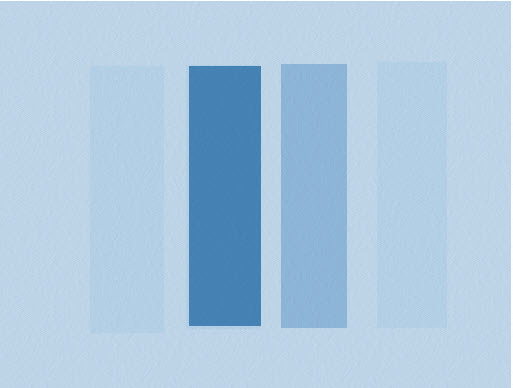
In both examples, value is contrasted, but in the second, it is contrasted more strongly than in the first example. All action principles work by degrees, and by the way we place those degrees, allowing other visual elements to participate.
Using value contrast as our primary action, we can create a work in which the eye experiences balance within the composition. In that case, the visual element is value. The action principle is contrast. The results of the action is balance.

When we make a painting, we are creating an experience in seeing, not just a bland, pleasant design. The experience in seeing, entering through our eyes, causes our minds, thoughts, and emotions to find the meaning.
The level you're taking us back to, to the senses and the human experience which occurs through the senses - and then breaking down how the visual sense is guided and then subsequently how we are impacted - is exactly what is missing from the explanation of composition. This is invaluable.