

ANNOUNCEMENTS:
• I hope you can join us tomorrow, July 27, for my monthly LIVE CHAT on YouTube. We will begin at 2 p.m. Eastern. Join in early so you won’t miss the video. This month’s topic is Clues to Correct Perspective.
• Our half price sale of the course, Conveying a Direct Light Source, ends on July 31.
A Myth About Composition
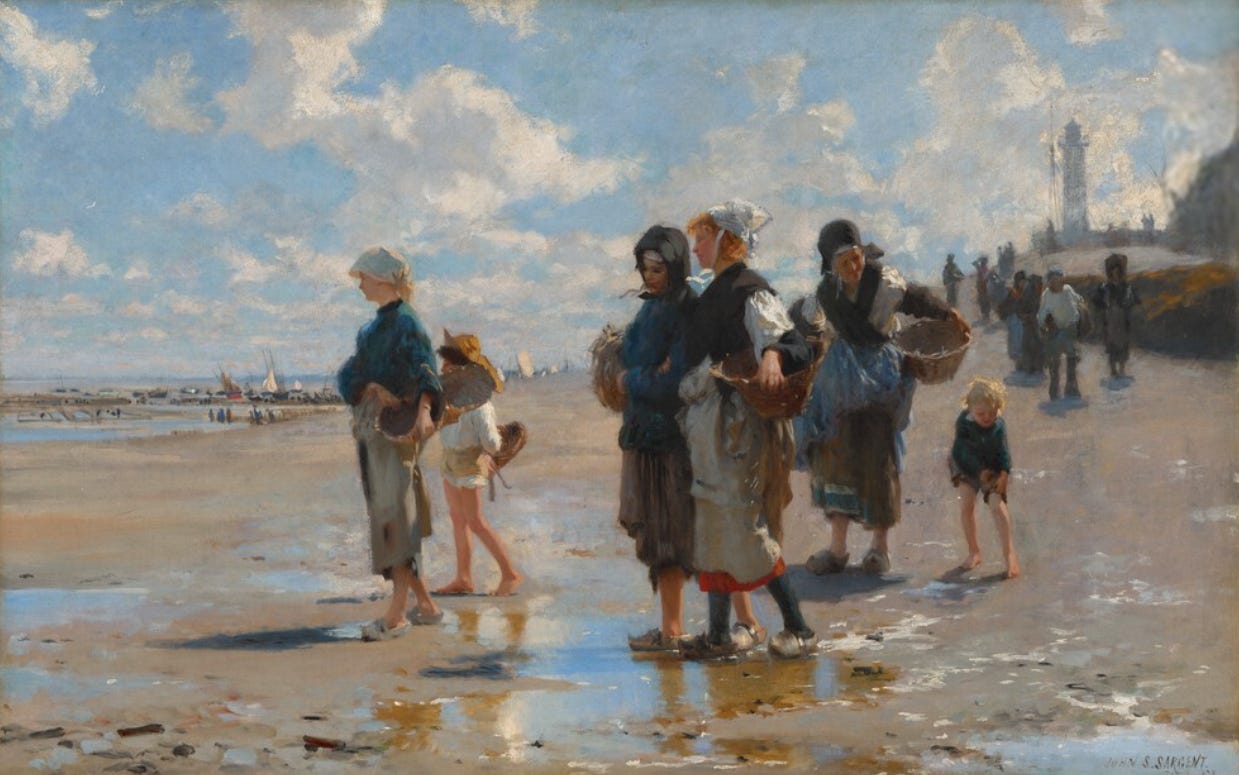
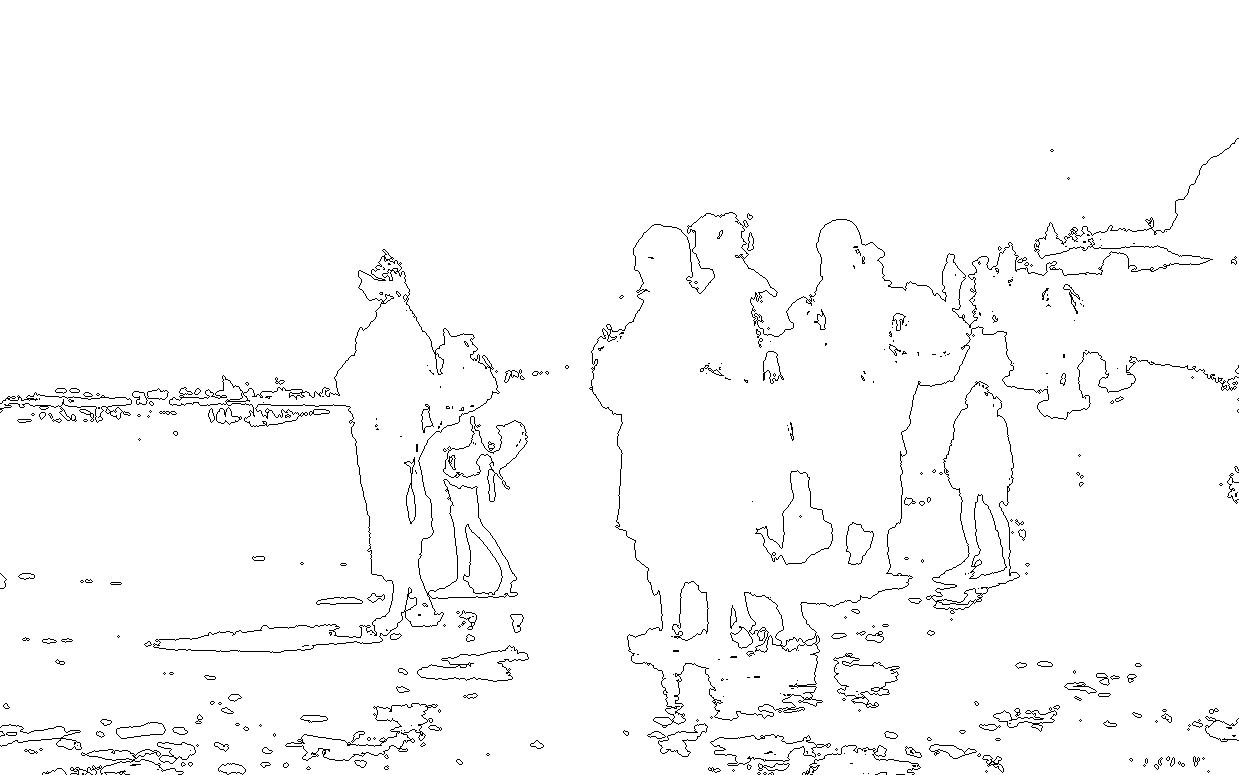
When we hear musicians talk about composing music, there is never a question that they are referring to all that goes into the whole piece. Still, too often, artists talk about the composition in a painting as if it’s only about arranging shapes before beginning to paint. But shapes are only a small part of what goes into the composing of paintings. But more importantly, the composing does not stop there.
In The Oyster Gatherers, if John Singer Sargent’s composing process considered only the arrangement of shapes in the beginning, it could have been a total wash.
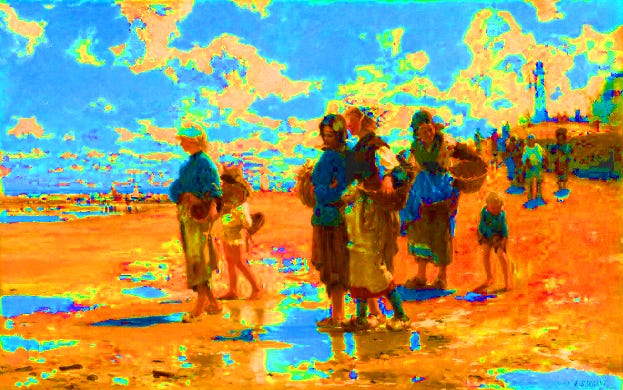
What if, for example, he had done the arrangement at the beginning, then totally moved away from composing to filling shapes in with saturated color.
Or what if he had used extreme value contrast, emphasizing only the placement of people's shapes?
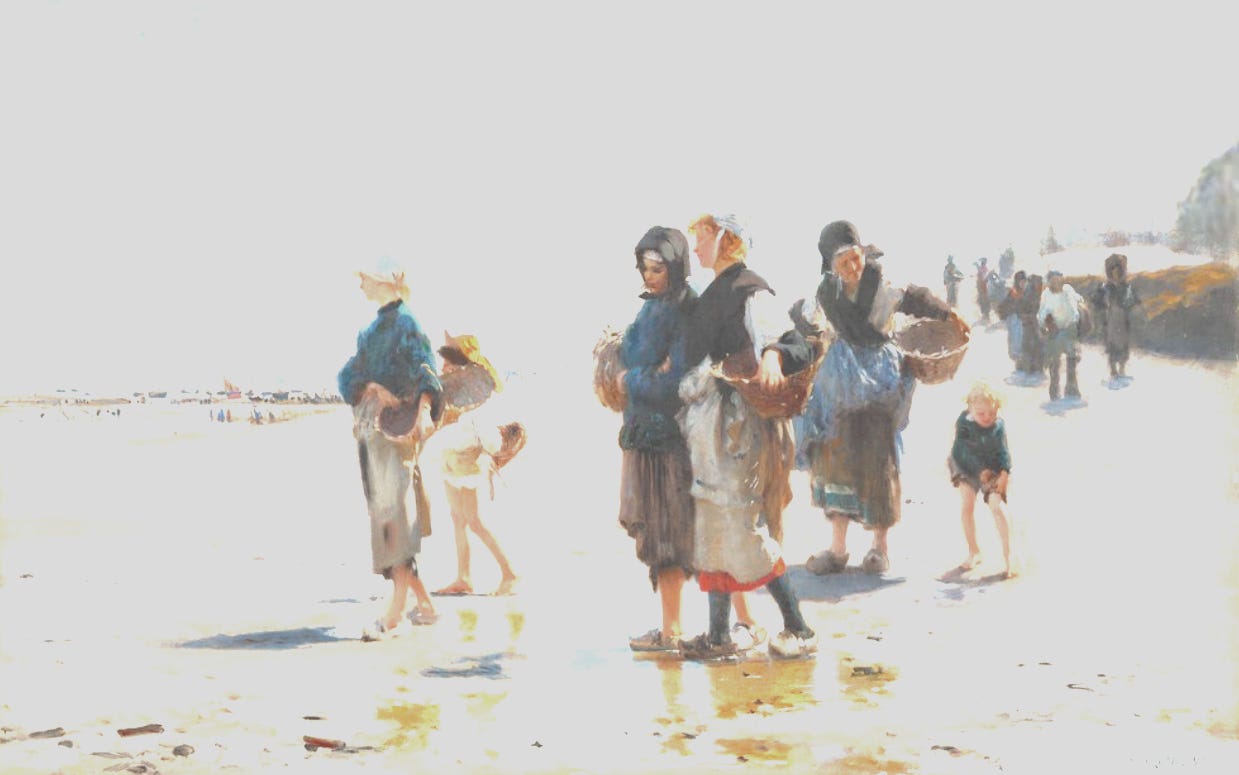
These two hashed-up renditions, when compared to Sargent’s actual work (photo at the top), demonstrate the importance of how all the composing elements work together. The process itself is not that different from the process of composing music.
We begin composing with the first brushstroke we put down. The composing ends with the last brushstroke. Everything that happens in between is a part of the entire composing process.
We have seven elements that make up our visual vocabulary. When we are painting, we are composing with all seven, plus the techniques we use to communicate with them. Add to that all the ways we can make these work to express, interpret, and translate. Often, it is during this process that the true expression of the painting emerges. This, too, is composing.
It is a myth to think that the composition is made first, before the painting begins.
I am very moved by the idea that the painting process is a continuation of element of composition…that composition is not a “one and done“ activity. I have always felt that the painting begins with a mark. Then you make a second mark. And then you need to figure out what needs fixing, because something always needs fixing. And so it goes…
Each element entails quite a bit, it seems.