

The advantage music has over painting is that we are more likely to keep listening than to keep looking. If a painting doesn't capture our attention at first glance, chances are we'll look away from it, going onto something else. Often, the reason for its failure to engage us longer is the artist's neglect to vary similar areas or repeated shapes.
There are abundant repetitions in nature, but nature's repeated elements contain variations, and the artist's ability to capture and express, even exploit, those variations is one way to hold a viewer's attention, as well as give a richer meaning to the painting.
Look at the variations in color Kevin MacPherson has put into the sky and water of “Shem Creek Afternoon.”

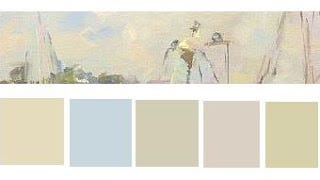
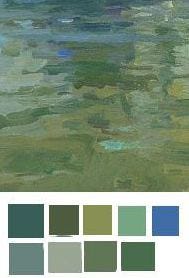
In both sky and water, there are repetitions that some might translate into ho-hum interpretations, but MacPherson has looked more closely and found hue, saturation, and even value differences that keep these areas compelling. And on closer observation, we can see that he’s repeated the kind of stroke he uses for the water while varying its width, length, and occasionally its direction.
Think about that the next time your brush reaches three strokes in a row for the exact color mixture.