

ANNOUNCEMENTS:
• Each month we add a new course to our Academy and make it available half-price for during that month. Check out this month’s new course HERE.
• Our July workshop is filled. Stay tuned for the announcement of our August workshop.
Our Visual Language at Work
I think a lot about language—not just our spoken language, but other kinds like the language of music, and of blending music and words. I am especially intrigued by how much our visual language has in common with the language of music.
For one thing, both languages have an interactive vocabulary that makes things happen. Think about the similarities between the vocabulary of notes in music and color in painting. A single note in music does nothing alone, but add another note with it or on either side of it and things begin to happen. In painting, a single color does nothing beyond looking back at us, but add another color beside it and visual action begins.
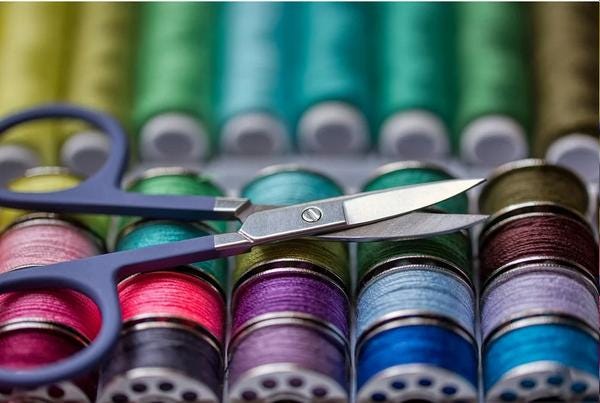
Look at the photo below. Do you see what that bright red is doing to the other colors? Hold your hand in front of it to block it out and notice how toned down the remaining colors appear without it.
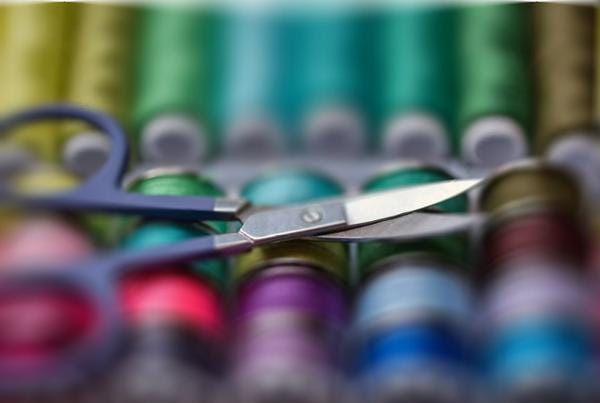
The same thing happens no matter whether we blur the shapes…
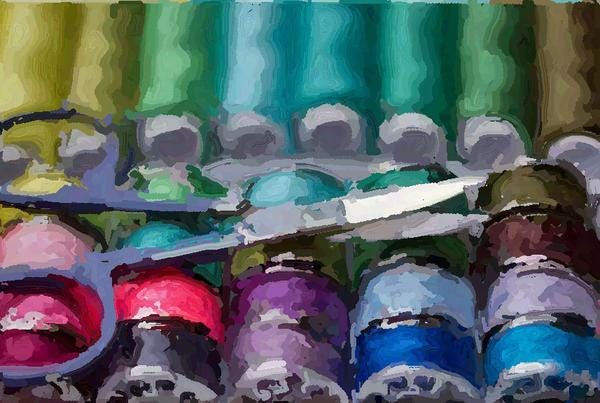
…or turn them into textures…
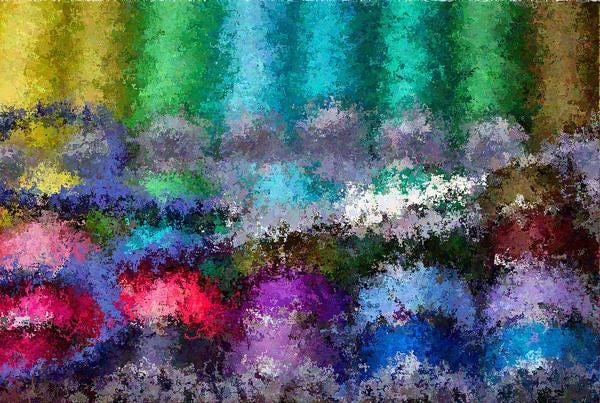
…or change the focus to emphasize the scissors.
However, when we distribute the bright red throughout the piece, it completely loses its role of emphasizing the other colors and takes on an important new role of repeating itself among them as an equal. The kind of visual action changes entirely.
And that doesn't even scratch the surface of possibilities.